


A British Isles cruise is very good at showing you the edges of these islands and almost incapable of showing you the middle. Which is fine, as long as you know that going in and build the trip to match. Add three to five days on land at one end and you get both. I’m Donnetta Byrd, a travel advisor, and the United Kingdom is one of the four places I focus on. Here is how the two halves fit together for summer 2027 and 2028.
What the cruise part actually is
Most British Isles sailings are round trips from Southampton, running seven to fourteen nights, and the good news for anyone who does not love open water is that they rarely include more than two sea days. It is a compact region and the ship is almost always going somewhere.
The standard ports are Cobh for Cork, Dublin, Belfast, Liverpool, Holyhead for Wales, Greenock for Glasgow, Invergordon for Inverness and Loch Ness, Kirkwall in Orkney, Lerwick in Shetland, Falmouth or Portland for the south of England, Guernsey, and often Le Havre in France on the way home.
For the lines I book, Princess, Holland America and Viking are the real British Isles operators. Princess and Holland America both have 2027 and 2028 programs open, and Holland America has been adding Irish calls. Viking is the interesting one, and I will come back to why in a minute. Royal Caribbean sails from Southampton, but its 2027 season there, on Freedom of the Seas, is Norway, Iberia and northern Europe rather than a British Isles circuit. The line does sell the British Isles, mostly as longer sailings out of Amsterdam. So if someone has told you they are doing the British Isles on Royal Caribbean, check the actual port list and where the ship starts.
The tender question, and why the small ship wins here
This is the one that surprises people, and it runs opposite to what you would guess.
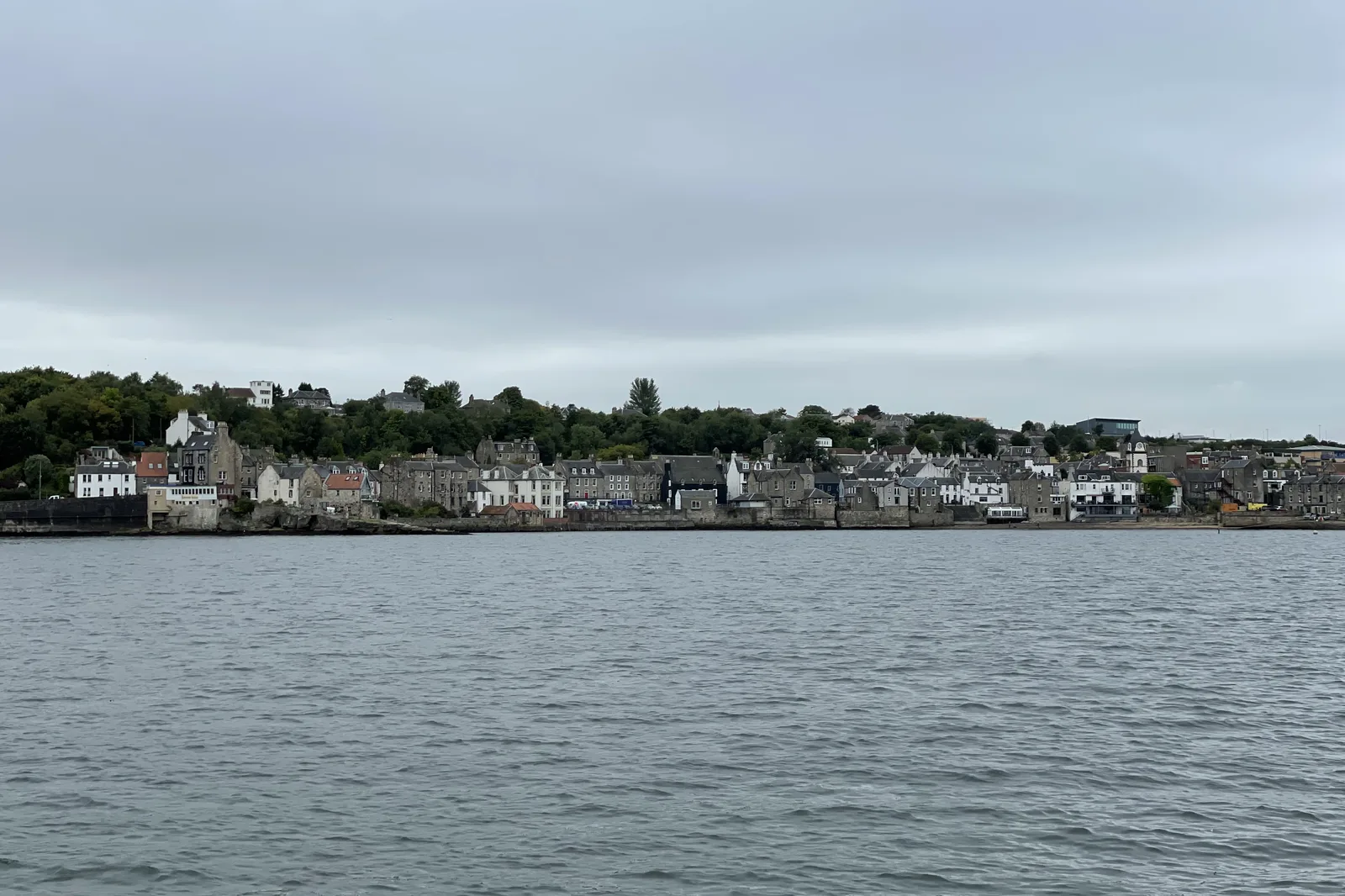
Shorter ships tender less in this region, not more. Several of the best ports have short berths, and once a ship is past a few hundred meters it stops fitting and has to anchor offshore instead. Falmouth, Lerwick and the Edinburgh berths all have limits that a large modern ship exceeds and a smaller one does not. It is not a clean rule and it varies port by port and ship by ship, which is exactly why it is worth checking your specific sailing rather than assuming.
That matters more than it sounds. A tender means steps down into a small moving boat, a line that can run to ninety minutes at a busy port, and a call that bad weather can cancel outright. If anyone in your party is unsteady on their feet, this is the single biggest practical difference between two ships on the same itinerary.
Some ports tender for everyone regardless of ship size. Guernsey always tenders. Edinburgh is the one to ask about by name, because it is really four different places. Leith is the only one where you step off onto a dock, and the lock into it caps the ship at around 690 feet, so it tends to be the smaller and more expensive ships that get it. Newhaven is an anchorage with a tender in, and it is the closest of the lot to town. South Queensferry, which is what most mid-size and large ships get, tenders you ashore ten to fourteen miles out under the Forth Bridge. Rosyth is a berth on the far shore, thirty to forty minutes by road. Dublin is worth asking about specifically, because ships that use Dublin Port berth alongside while ships sent to Dún Laoghaire tender in.
This is where Viking earns its place. Its ocean ships carry around 930 guests, which is small enough to get into ports the big ships cannot reach at all. Its fifteen day British Isles and Ireland sailing runs London to Belfast and calls at Fowey, Killybegs, Stornoway, Tobermory and Fort William alongside the usual Cobh and Greenock. You will not find Fowey or Tobermory on a four thousand guest ship’s port list, because the ship does not fit. If the ports are what you came for, that is the argument.
The trade is that Viking is 18 and over, so it is a couples and friends trip rather than a family one, and the fare sits well above a mainstream line. What you are buying is the port list and the size of the crowd you see it with.
One caution. There are widely shared lists online naming Cobh, Invergordon and Kirkwall as tender ports. The port authorities themselves say otherwise. Check tender status for your specific sailing and your specific ship rather than trusting a general list, and if you would rather not work that out yourself, that is squarely my job.
The ports that are a walk, and the ports that are a bus
Not all port days are equal, and the itinerary will not tell you which is which.
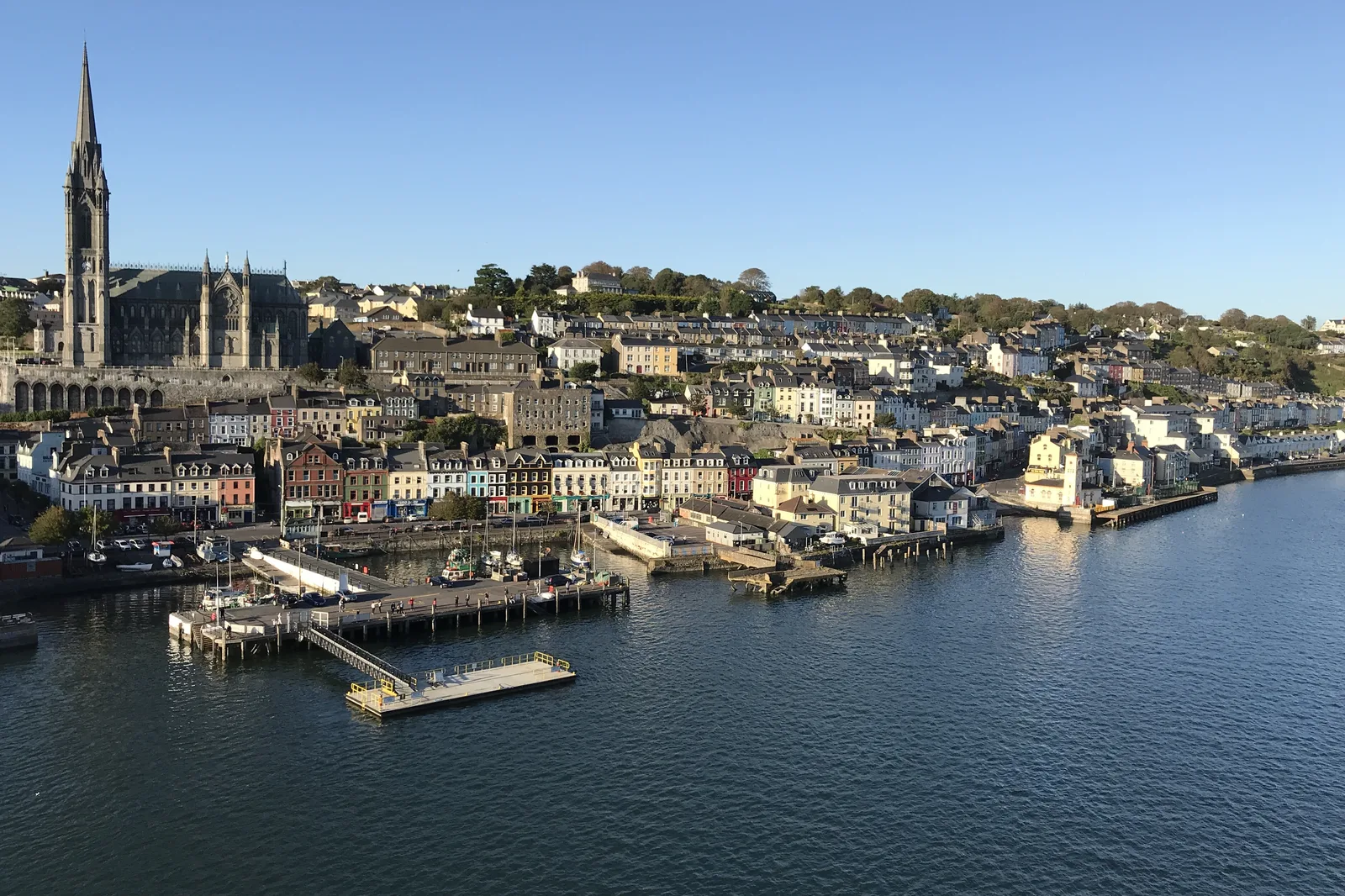
Easy, walk off and you are there. Liverpool puts you ten minutes from everything. Falmouth is a flat fifteen-minute walk into town. Cobh is a pretty waterfront with the cathedral above it and a train to Cork.
Long transfers, so book accordingly. Invergordon is about an hour each way to Loch Ness. Belfast is about an hour each way to the Giant’s Causeway. Portland is an hour and a half each way to Stonehenge. And Le Havre is two and a half to three hours each way to Paris, which makes for a very long day and a small amount of Paris.
Orkney is the one place I would always take the organized tour. Skara Brae, the Ring of Brodgar and the standing stones are scattered across the island and awkward to link on your own.
When to go
The season runs May through October. For my clients I aim at early to mid June or early September.
June gives you close to maximum daylight, and this far north that is a real advantage. Edinburgh gets more than seventeen hours in late June, so an evening call still has usable light at ten at night and those long transfers hurt less. It also carries the lowest risk of a tender being cancelled by weather.
Early September gives you heather, the warmest sea of the year, thinner crowds and lower fares, in exchange for shorter days and less settled weather.
August is the month I steer value-minded travelers away from. Peak crowds, peak prices, and no better weather than June.
One packing note that catches Americans every time. This is not a warm summer. A July day in Shetland averages a high around 57 degrees. Dublin summers run cool, damp and cloudy, and days above 77 are uncommon. Pack a proper jacket and a sweater even in midsummer, and waterproof shoes rather than sandals.
The land days, which is where the trip gets good
Three to five days at one end changes the whole character of the trip.
London before a Southampton sailing is the obvious one. Southampton is about eighty miles from central London. The train takes an hour and twenty minutes but runs on commuter stock with nowhere to put two large suitcases, which is a miserable hour if you have packed for two weeks. The coach is cheap and takes two hours. What I usually book instead is a private transfer routed through Stonehenge or Windsor, which turns a dead travel day into a proper day out and delivers you and your luggage to the terminal.
Edinburgh works as three to five days on its own, with the Castle, the Royal Mile, Holyroodhouse and the New Town, and day trips out to Stirling, St Andrews and the Forth bridges.
Dublin as a three or four day base gives you Trinity and the Book of Kells, Kilmainham, the Guinness Storehouse, and easy day trips to the Boyne Valley and Wicklow. Be warned that the Cliffs of Moher are on the far coast and make for a very long day from Dublin.
And then there is the part that fits what I do best. The British Isles is one of the great train travel countries and almost nobody uses it on this trip. London to Edinburgh is four and a half hours downtown to downtown, which beats flying once you count the airports. The Caledonian Sleeper runs overnight from London to Fort William and puts you in Glencoe country at breakfast without an internal flight. And the Kyle Line from Inverness out to Kyle of Lochalsh, on the mainland opposite Skye, is one of the most scenic runs in Britain, which matters because Invergordon, a port your ship already calls at, is forty-five minutes from Inverness. That is the neatest post-cruise pairing available on this itinerary and I almost never see it on a brochure.
The paperwork Americans now need
You need a UK electronic travel authorisation. This is new enough that people are still getting caught by it. It costs twenty pounds, you apply through the UK ETA app or online, and most decisions come back within minutes, though the official guidance allows up to three working days. Apply at least three working days out. It lasts two years and it is tied to the passport you applied with, so renewing your passport means buying a new one. Since February 2026 the carriers themselves check it before they let you board, which means a missing ETA is not something you can sort out at the pier.
One thing about it specifically for cruisers. Since February 25, 2026 the UK enforces it for arrivals by sea and rail, not just by air, and carriers will not board you without one. If you are calling at a UK port and going ashore, you need it.
It is tied to your passport, so if you renew your passport between booking and sailing, you have to buy a new one.
Ireland is different and simpler. Ireland is in the EU but not in Schengen, so there is no ETA and no ETIAS to buy. A valid passport is all you need. Two catches. One appears if you carry on from Ireland into a Schengen country afterward. The other catches people on land extensions: going from Ireland into the UK, including driving north into Northern Ireland, still needs your UK ETA. The exemption there is for people who live in Ireland, not for Americans passing through.
If your sailing includes Le Havre or any other stop in the EU, there are two separate things coming. ETIAS is an authorisation you buy in advance, twenty euros, launching with a transition period that runs into 2027. The Entry/Exit System is the biometric registration you do at the border itself, no fee. Neither is difficult, both are new, and I will tell you which apply to your specific itinerary.
Four practical things
Money. The UK uses pounds and Ireland uses euros, and Northern Ireland is UK, so a Belfast day and a Dublin day are different currencies. Scotland and Northern Ireland print their own banknotes, which are perfectly valid and which shopkeepers in England sometimes look at sideways. Spend them before you leave. Contactless cards work nearly everywhere.
Tipping. Far less than at home. Many restaurants already add a service charge of about 12.5 percent, so read the bill before you tip again, and know that you can ask for it to be taken off if the service was poor. If there is no service charge, ten to fifteen percent is normal. Nobody tips at a pub bar. Round a taxi fare up or add ten percent, a pound or two for a bellhop, and five to ten pounds a person for a guide who has given you a good full day. One more thing that catches Americans out: dinner starts later, around seven, and a table for more than four generally needs a reservation.
Driving. I would not. Left-hand driving plus single-track Highland roads plus a manual gearbox is a bad combination, and automatics cost more and sell out. Use the trains between cities, ship excursions or private drivers on port days, and a private driver-guide if you want the Highlands.
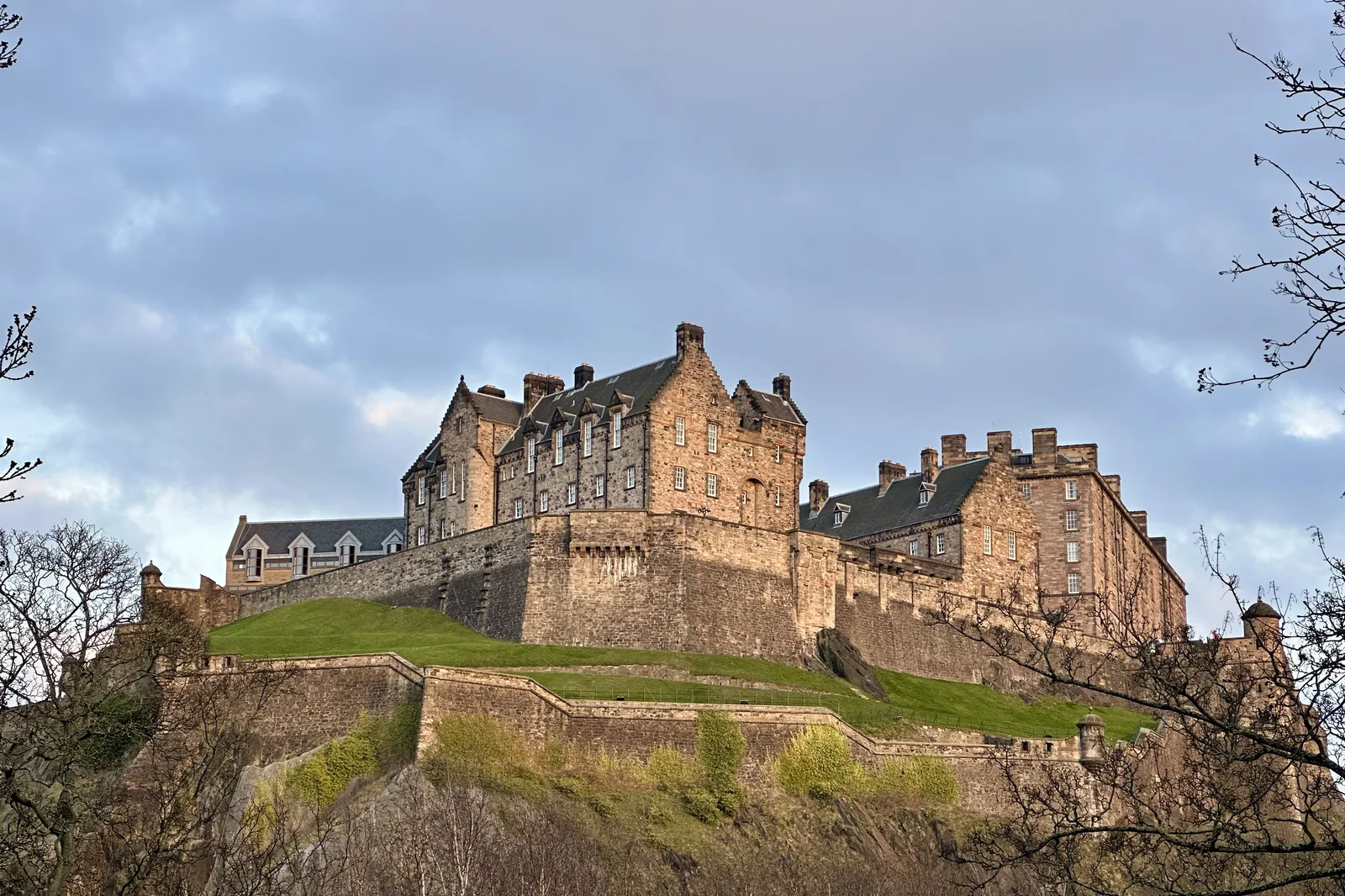
Edinburgh Castle looks accessible and is not. The approach is cobbled and the main route reaches a fifteen degree gradient. There is a mobility vehicle, but it cannot run for an hour around lunchtime because of the one o’clock gun. If steps and slopes are an issue, tell me and I will plan around it rather than letting you find out at the gate.
British Isles cruise FAQ
How long should the trip be? A seven to fourteen night cruise plus three to five land days at one end. Twelve to eighteen days total is the shape that works.
Should I do the land part before or after the cruise? Before, almost always. It absorbs the jet lag somewhere comfortable and it protects you against a delayed flight costing you the ship.
Which cruise line is best for the British Isles? Princess and Holland America run the real circuits at a sensible price. Viking if you want a smaller ship that berths where the big ones cannot and an excursion included in every port.
Do I need a visa for the UK? Not a visa, but you do need an electronic travel authorisation, and since 2026 it is enforced for arrivals by sea. Twenty pounds, applied for through the UK app, tied to your passport.
Is it going to rain? Some. Pack for cool and damp and you will be comfortable. The long June daylight more than makes up for it.
Can I see the Highlands on a cruise? Only the edge of them, on a long day out of Invergordon. If the Highlands are what you actually want, put them in the land half of the trip.
Let’s put the two halves together
The cruise is the easy half to book. The value I add is the other half, which land days go where, whether your ship berths or tenders at the ports you care about, how you get to Southampton without hauling luggage onto a commuter train, and whether a couple of days of the United Kingdom by train belongs in your itinerary. Reach out and let’s put the two halves together.