


These are not two versions of the same vacation. They are two different trips that happen to share the word cruise, and most of the disappointment I see comes from someone booking one while picturing the other. I’m Donnetta Byrd, a travel advisor, and I have sailed both, the rivers with Viking and Avalon and the ocean side including a Holland America Alaska cruisetour. Here is how I tell people apart.
Start with the size, because everything follows from it
A European river ship carries around 156 to 190 guests. Not a few thousand. One hundred and fifty six.
The reason is not taste, it is concrete and steel. River ships have to fit through locks and under bridges, so the standard European hull comes out at about 443 feet long and 37 feet wide. Viking, Amadeus, Scenic, Emerald and Avalon all build to roughly that, because the waterway decides and not the marketing department. AmaWaterways is the interesting exception, having built AmaMagna to double the usual width, which buys a pool and extra restaurants at the cost of where it can go. On high-water days the wheelhouse itself folds down so the ship can clear a bridge.
An ocean ship has no such limit. Royal Caribbean’s Icon of the Seas carries 5,610 guests at double occupancy. That is about thirty times a river ship.
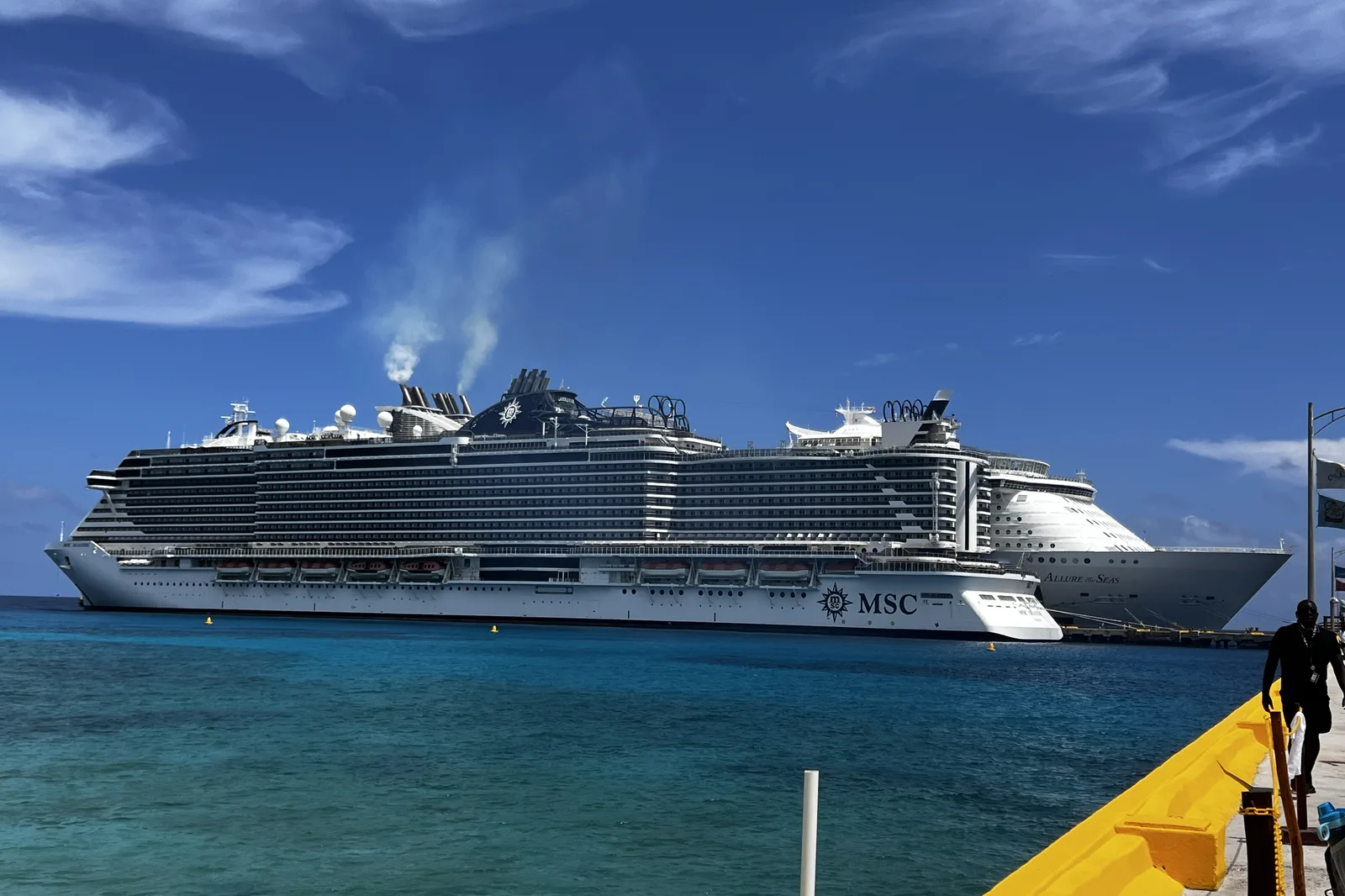
Where the ship actually ties up
For my clients, this is usually the difference that settles it.
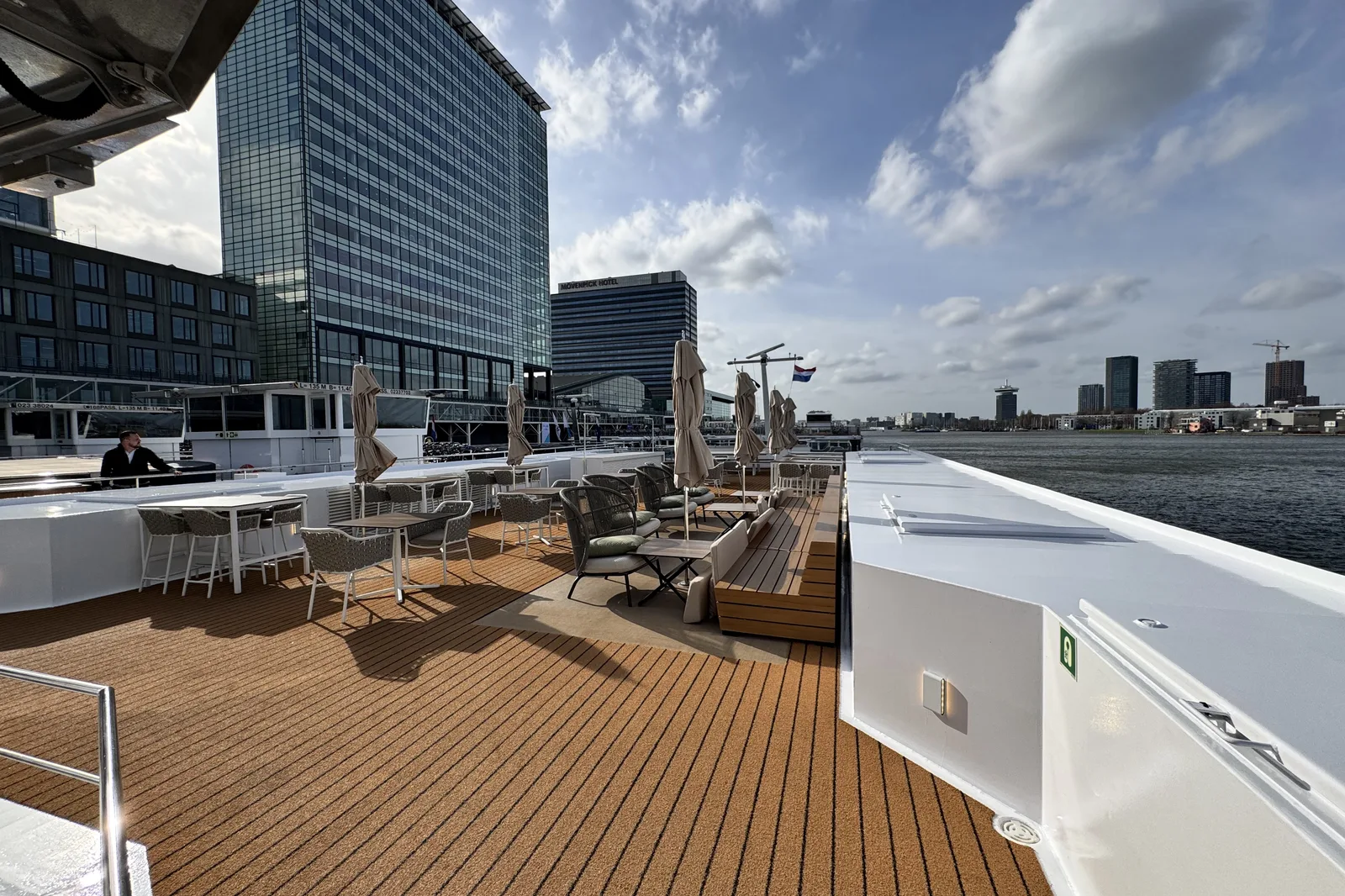
A river ship docks in the middle of town. You walk off and you are in Bamberg or Vienna or Bratislava. An ocean ship docks where a ship that size can dock, which is often nowhere near the city on the itinerary.
Some real distances. Rome is 50 miles from Civitavecchia. Paris is 123 miles from Le Havre. Florence is 56 miles from Livorno. Berlin is 150 miles from Warnemünde. So “a day in Rome” on an ocean cruise is realistically three to five hours in Rome wrapped in three to four hours on a coach.
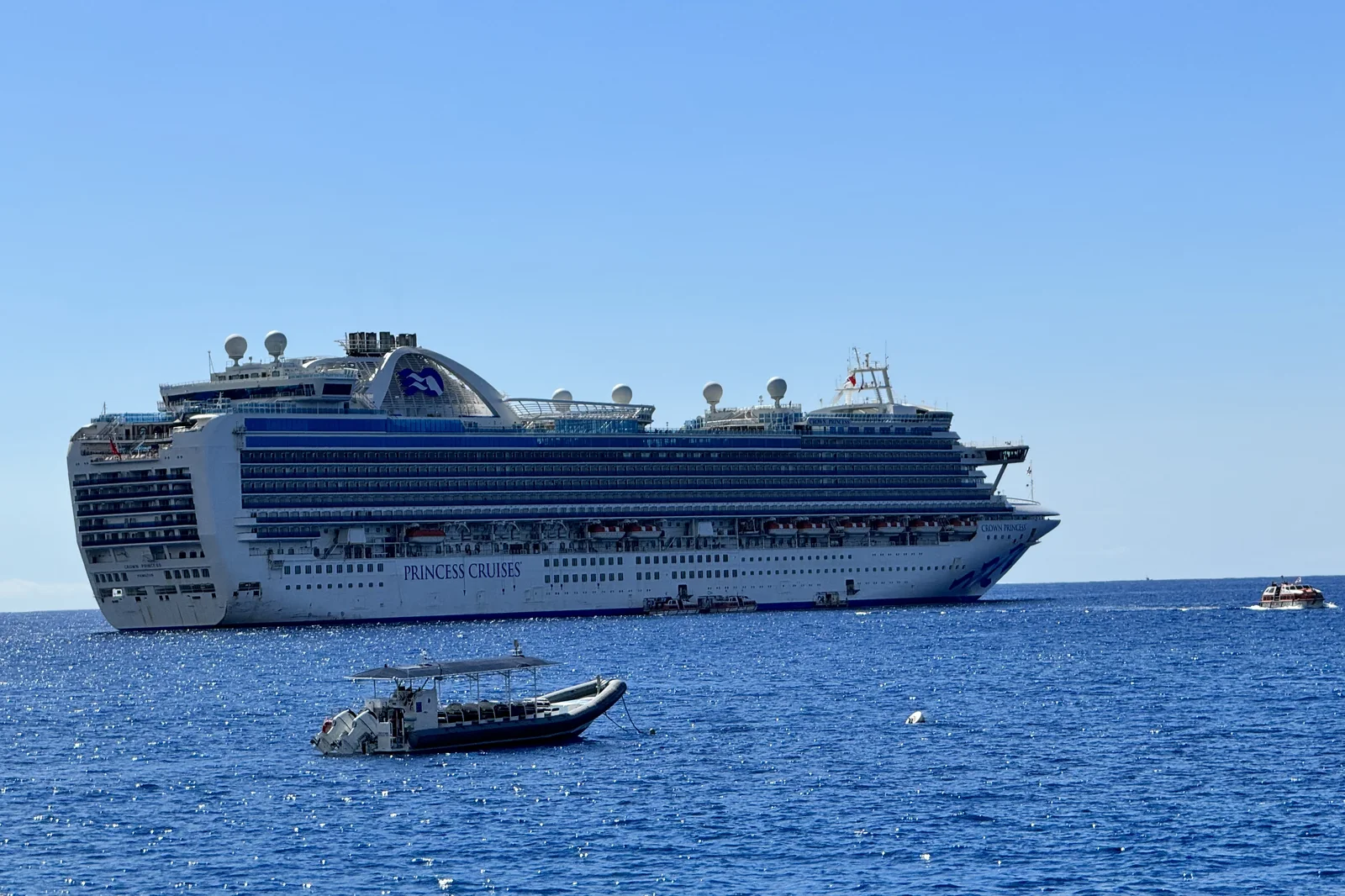
Then there is tendering. When there is no pier, ocean ships anchor and ferry you ashore in small boats. That can take up to ninety minutes in line, it involves steps and a moving boat, and bad weather can cancel it outright.
What a day looks like
River is a new place every day, sometimes two, and no sea days at all. A standard Rhine week gives you six guided tours and four countries in eight days. You sail overnight, wake up somewhere new, tour in the morning, and have the afternoon to yourself.
Ocean gives you sea days, and whether that is a feature or a waste depends entirely on who you are. Some of my clients want two days of doing nothing in the middle of the week and consider that the whole point. Others get restless by lunchtime on the first one.
The excursion difference is worth knowing if anyone in your party is slower on their feet. River lines routinely run the same tour at three walking paces, gentle, regular and active, and some offer up to eight guided options a day, all included. Mass-market ocean excursions rarely tier that way, and the activity level is the single most important line in the description.
What each one really costs
River costs more per night. That is true and it stays true. Entry level runs roughly 400 to 550 dollars per person per night, mid-tier 550 to 800, and the luxury lines from 800 up toward a thousand.
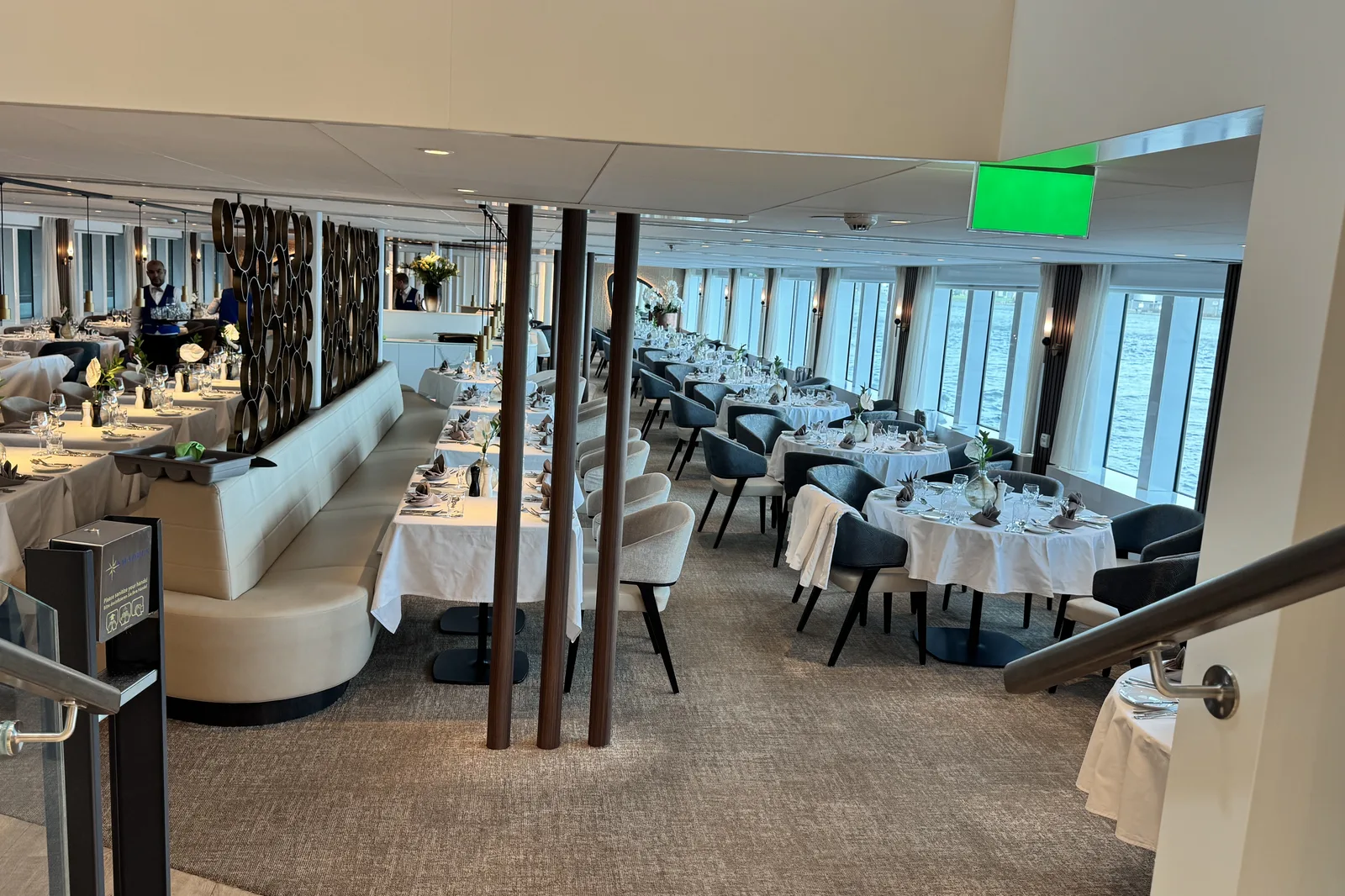
Ocean base fares look far cheaper. Carnival runs around 82 dollars a night for an interior and 118 for a balcony, Royal Caribbean around 105 and 152. But a base fare is a starting figure, and to get an ocean cruise to include what a river fare already includes you have to add back daily gratuities of roughly twenty dollars a person, more in a suite, a drinks package that can run 59 to 109 dollars a day before its own 18 to 20 percent service charge, wifi at 13 to 35 dollars a device per day, an excursion in each port, and port taxes. Do that arithmetic on a European week and the per-night cost roughly doubles.
River does not close the gap entirely. It is still the more expensive trip. But the gap is a good deal smaller than the brochures make it look, and the river number is far closer to the number you will actually spend. I wrote a fuller breakdown of what a river cruise fare covers if you want the detail.
The gratuity structure deserves its own sentence, because it is where ocean budgets break. On the river it is either included, as it is on Scenic, Emerald and, on US bookings, Amadeus, or a single predictable line item of about twenty dollars a night. On the ocean it is that daily charge plus a percentage on nearly everything discretionary you buy all week.
Where each one wins
River wins if you want to see a lot of places without packing and unpacking, if you want the ship in the middle of town, if you want the touring already handled and tiered to how you actually walk, if crowds wear you out, and if you would rather pay more up front and stop reaching for your wallet.
Ocean wins on cost. It also wins on everything that needs floor space. Theaters, real pools, a casino, several specialty restaurants, a proper spa. It wins for anyone traveling with children or grandchildren, because most river lines set an age floor. And it wins on medical, which matters more than people like to think about. Ocean ships carry a medical center with a doctor and nurses to a published industry standard. River ships work differently, being close to shore the whole time, so if anyone in your party travels with something that needs monitoring, tell me and I will confirm the arrangements with the specific line before you book.
Two things that surprise people
Solo travelers can do much better on the rivers, but not automatically. Ocean lines commonly charge a single supplement of 100 percent, meaning you pay for two. Several river lines compete hard for solo business. Tauck waives the supplement on its entry category across its river season, Avalon waives it on most Europe departures on Deluxe Staterooms and Panorama Suites, and AmaWaterways, Emerald, Amadeus, Uniworld and Scenic each build a cabin or two for one person. Others cut the supplement on selected sailings. But it is not a rule of the category, and the biggest name on the river is the worst of them for one person. I wrote up what one person actually pays separately, because the gap between the best and worst river fare for a solo traveler is far wider than the gap between river and ocean.
River cruising is harder on mobility than ocean cruising, not easier. People assume the small ship is the gentle option. Often the sun deck is only reachable by stairs, because the ship cannot carry an elevator that tall under the bridges. Ships sometimes moor side by side, which means crossing another vessel’s deck and its stairs to get ashore. Several lines will not take motorized scooters at all. Ocean ships have elevators to every deck and accessible cabins as standard. If steps are a real issue, that flips the recommendation.
The one risk on each side
On the river it is water levels, and this is not a story about one bad summer that is over. 2026 has been extraordinary and it has not finished. The Danube at Budapest broke its 2018 record in late July and kept falling, the Rhine at Kaub set its own record low in August, and Kaub was still reading below zero at the start of October. Those gauge readings are measured against a fixed reference point rather than telling you how deep the water is, so nobody is wading across the Rhine. What they do mean is that a loaded ship sits too low to pass under a bridge or over a shallow stretch. Through this season the lines have rerouted around the Rhine Gorge, moved guests onto sister ships and bussed them around the shallow stretches, and AmaWaterways says it has not canceled a single departure over it. Winter brings the opposite problem, too much water to clear the bridges. Lines almost always adjust rather than cancel, but you should know it can happen and you should carry insurance.
On the ocean it is motion and missed ports. Stabilizers help and modern ships are steady, but a swell can turn a tender port into an unplanned sea day with no notice.
So which are you
If you want daily touring, small scale and the ship in the middle of town, and the budget stretches, river cruising.
If you want a lower fare, sea days, big-ship variety, grandchildren, or you need elevators and accessible cabins, ocean cruising.
If you want the middle, and a lot of my clients do, Viking Ocean is the bridge. Its ships carry under a thousand guests rather than five thousand, include an excursion in every port the way a river line does, and still give you a proper ship.
River vs ocean FAQ
Is a river cruise better than an ocean cruise? Neither is better. River gives you more places, more included touring and a ship that docks in town. Ocean gives you a lower fare, sea days, more onboard variety and better accessibility.
Which is more expensive? River, per night. But an ocean base fare excludes far more, and once you add gratuities, drinks, wifi and excursions, an ocean week often costs close to double its advertised fare.
Are river cruises adults only? Viking is the strict one, 18 and over across its fleet. The others are looser. Emerald is around 12, Avalon around 8, AmaWaterways younger still. Scenic discourages under 12s but takes them at its own discretion, and Amadeus wants to approve anyone 14 or under before you book and says up front that its ships have nothing aboard aimed at children. What makes them feel adult is the price and the pace rather than the policy. If you want to bring a grandchild, tell me the age and I will find the line that takes them.
Do river ships get seasick? Rivers are flat. If motion is your worry, that alone is a strong argument for the river.
Can I do a river cruise if I use a wheelchair or a scooter? This needs a real conversation before booking. Several river lines do not accept motorized scooters and sun decks are often stairs only. An ocean ship is usually the better answer, and I will tell you which specific ships work.
Which should I do first? If you have never cruised at all, an ocean cruise is the cheaper way to find out whether you like being on a ship. If you already know you like travel but hate crowds and packing, skip straight to the river.
Let’s work out which one you are
Most people already know the answer once someone lays out the two trips side by side rather than selling them one. Tell me how you like to spend a day, how much walking is comfortable, and what you would be annoyed to miss, and I will tell you which of these fits and which one I would not put you on. Reach out and let’s work out which one you are.