

People book this trip picturing the train, and the train is only two days of it. The rest is mountain towns, lakes and one very long, very beautiful road. Knowing how the week actually breaks up is the difference between a trip that flows and one where you spend the good days in a parking lot. I’m Donnetta Byrd, a travel advisor, and I have ridden Rocky Mountaineer in both GoldLeaf and SilverLeaf. Here is the real shape of the week.
The two routes, and why you only need to choose once
For 2027 there are two western Canadian routes. First Passage to the West runs Vancouver to Banff or Lake Louise. Journey Through the Clouds runs Vancouver to Jasper. Both take two days on the train with a hotel night in Kamloops in the middle, and both run in either direction.
Day one is identical whichever one you booked. Vancouver to Kamloops runs over the same rails, and the two trains sometimes travel coupled together as far as the split. They part company east of Kamloops, and that is where they become different trips. First Passage climbs the original 1885 Canadian Pacific main line over Kicking Horse Pass. Journey Through the Clouds takes the later Canadian Northern line over the Yellowhead to Jasper.
Most of my American clients end up on First Passage to the West, for a practical reason. It finishes in Banff, and Banff is ninety minutes from Calgary airport. Jasper is a much longer haul home.
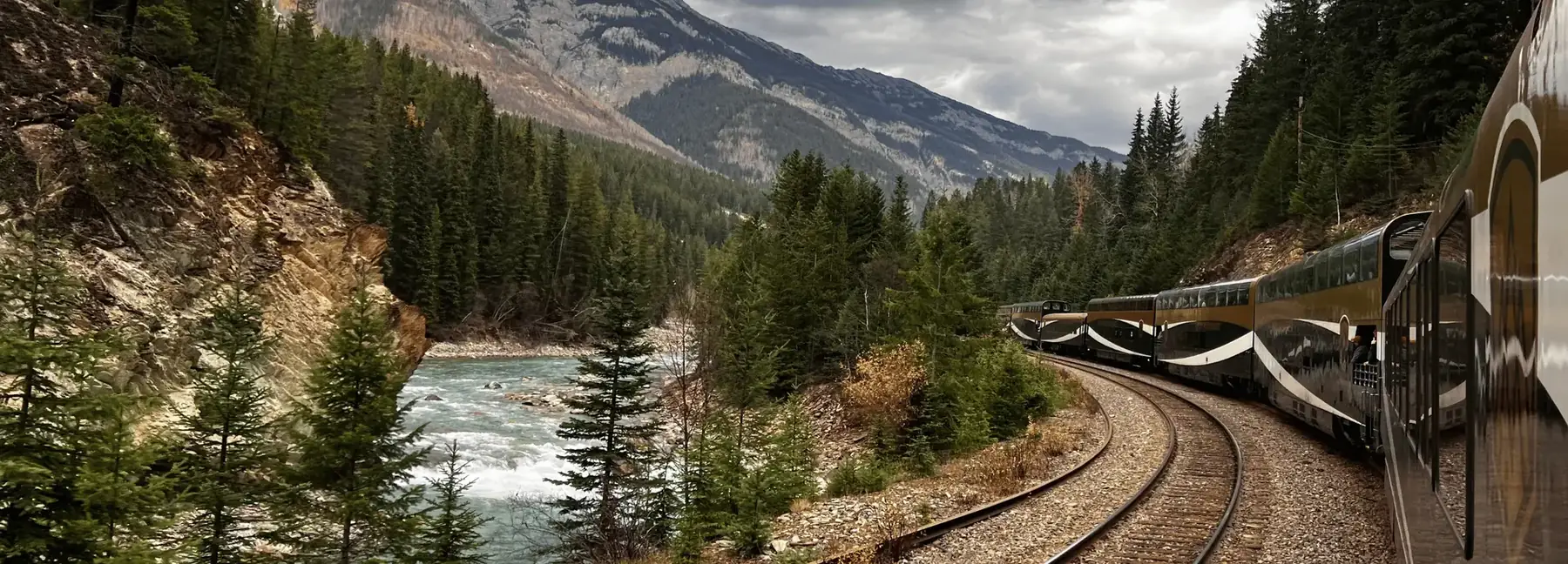
Season for 2027 runs roughly mid-April to mid-October, and the train is daylight only, so you never sleep through the scenery.
A real week, day by day
This is the eight-day shape most people actually buy.
Day one. Fly into Vancouver, transfer to your hotel, do nothing. You will have lost most of the day to the flight and the time change.
Day two. Vancouver. Stanley Park, Granville Island, the North Shore. Then the piece of admin that trips people up. Before you board you collect your welcome package with your boarding passes and luggage tags from a Guest Center in one of the partner hotels, and the hours are narrow. Your final documents give you the window for your departure, and I will make sure you know it, because missing it complicates your morning.
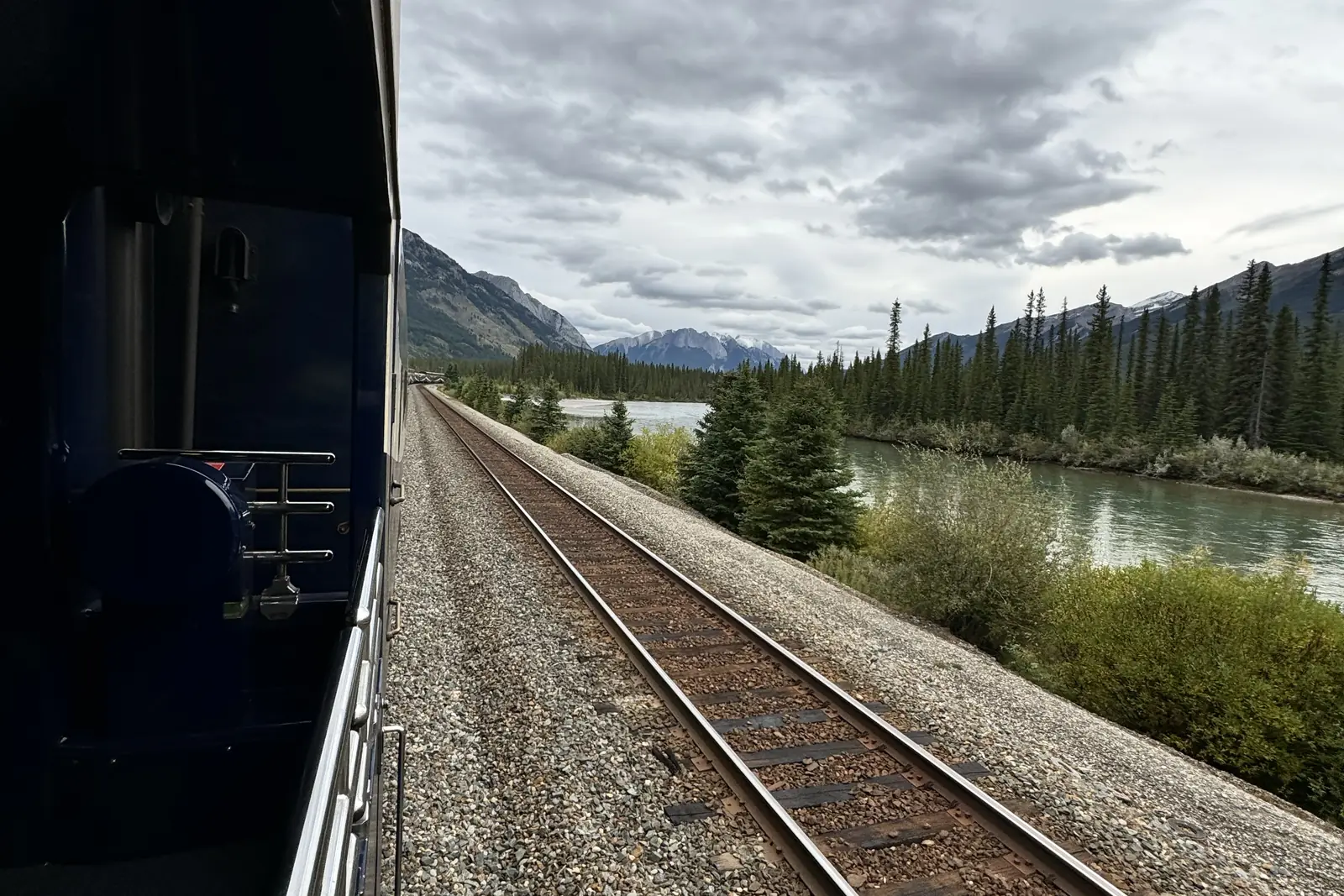
Day three, first day on the train. Hotel pickup around seven, departure at eight. You run up the Fraser Valley into the Fraser Canyon, past Hell’s Gate where the whole river squeezes through a gap, over the Cisco Crossing where the two railways swap sides of the river on neighboring bridges, then along the Thompson into the dry country around Kamloops. You arrive somewhere between six and half past seven in the evening.
Kamloops is where people are surprised twice, once pleasantly and once not. The pleasant one is that you get your hotel room key on the coach, so you walk straight past the front desk and your bag is already in the room. The other is that dinner is not included. Riverside Park is a short walk and the town has good places to eat, but plan for it rather than discovering it at eight at night.
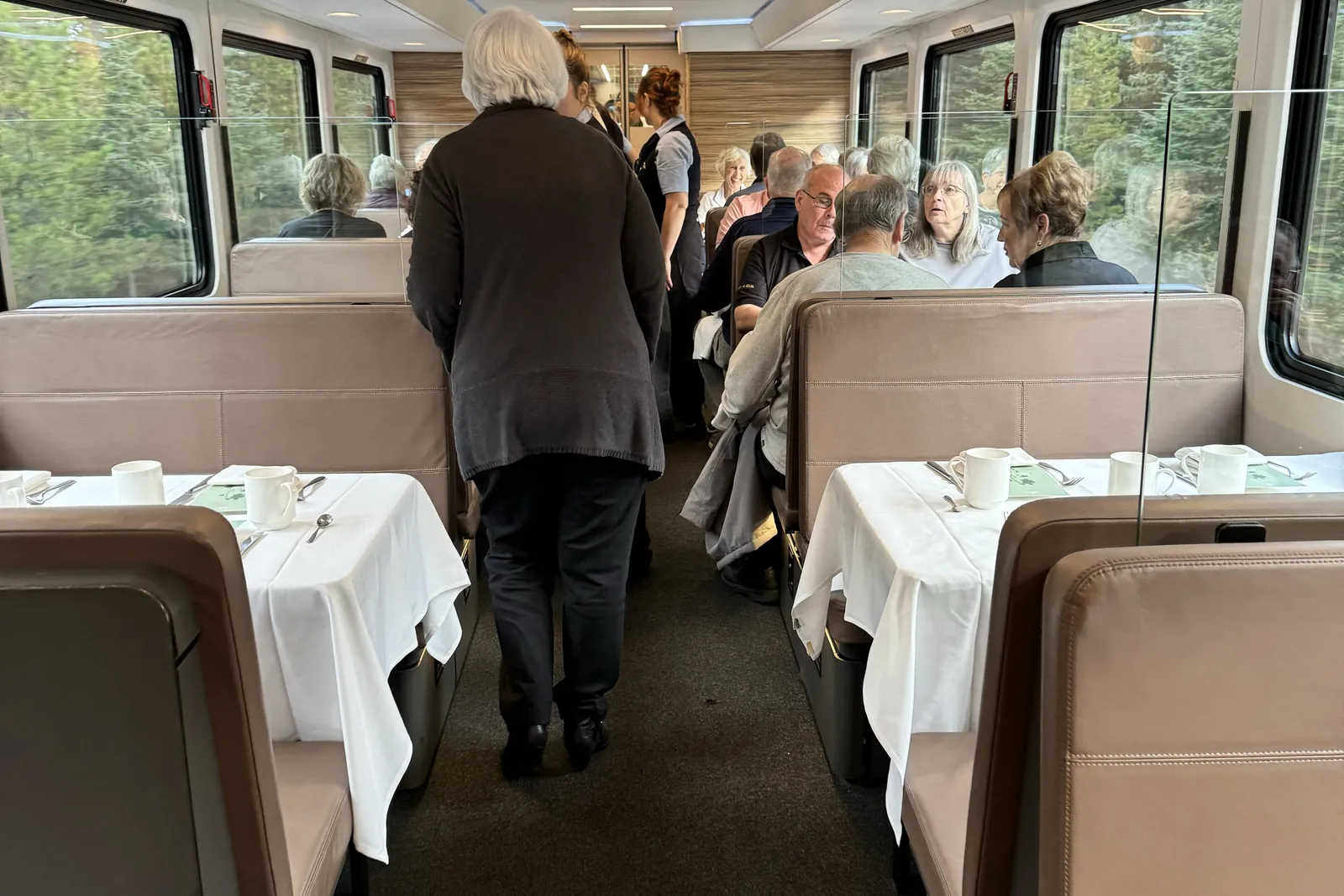
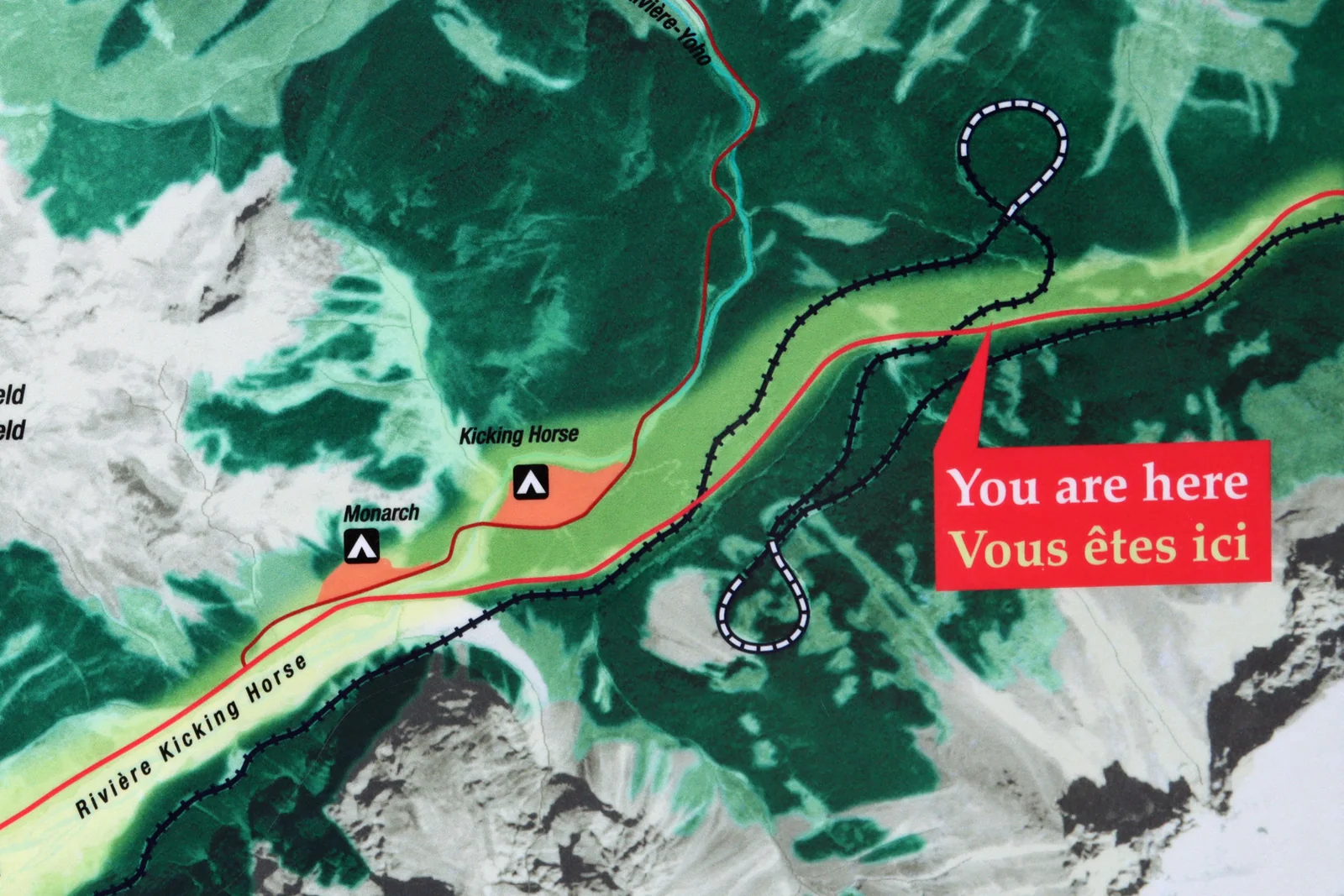
Day four, second day on the train. Early. Wake-up around six, bags in the hallway, coach to the station, away just before seven. This is the better of the two days. Shuswap lakes, then Craigellachie where the last spike went in, then Rogers Pass, then the Kicking Horse Canyon and the Spiral Tunnels, where the line loops back inside the mountain to soften a grade that was once the steepest main line in North America. Then Kicking Horse Pass and the Continental Divide at 5,338 feet, and down past Castle Mountain into Banff.
You arrive late, between eight and half past nine, and you lose an hour crossing into Mountain Time. On an October departure the last stretch is in the dark, which is one small argument for going earlier in the season.
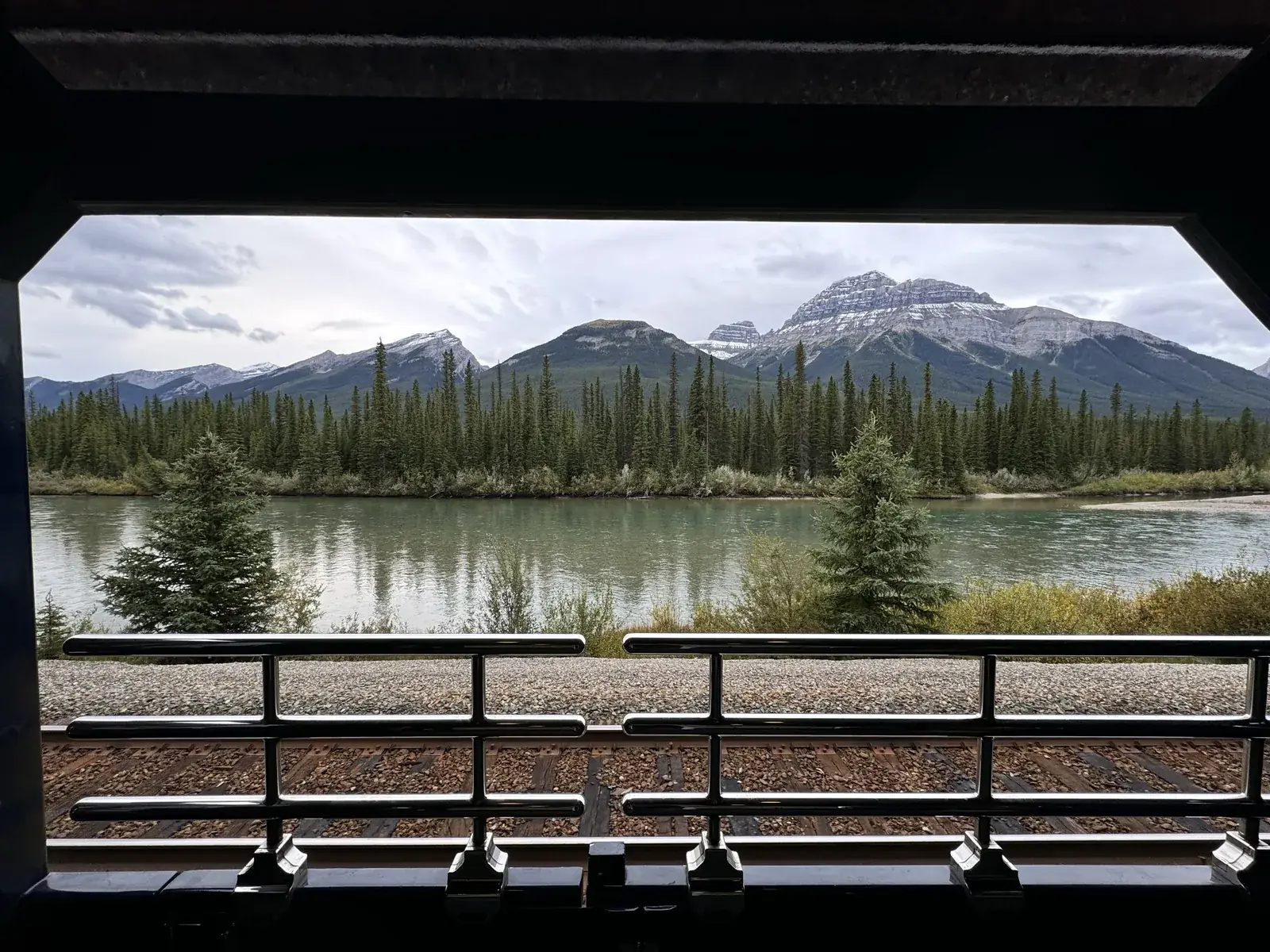
Days five and six. Banff and Lake Louise. This is where the week is won or lost, and it is the part most itineraries leave vague. More below.
Day seven. Down to Calgary, usually with a full day of sightseeing on the way.
Day eight. Fly home from Calgary.
Two nights in the Rockies is the minimum that works. Three is better. A four-day package with one night in the mountains will leave you feeling like you saw the train and not the place.
The lakes, and the rules that catch people out
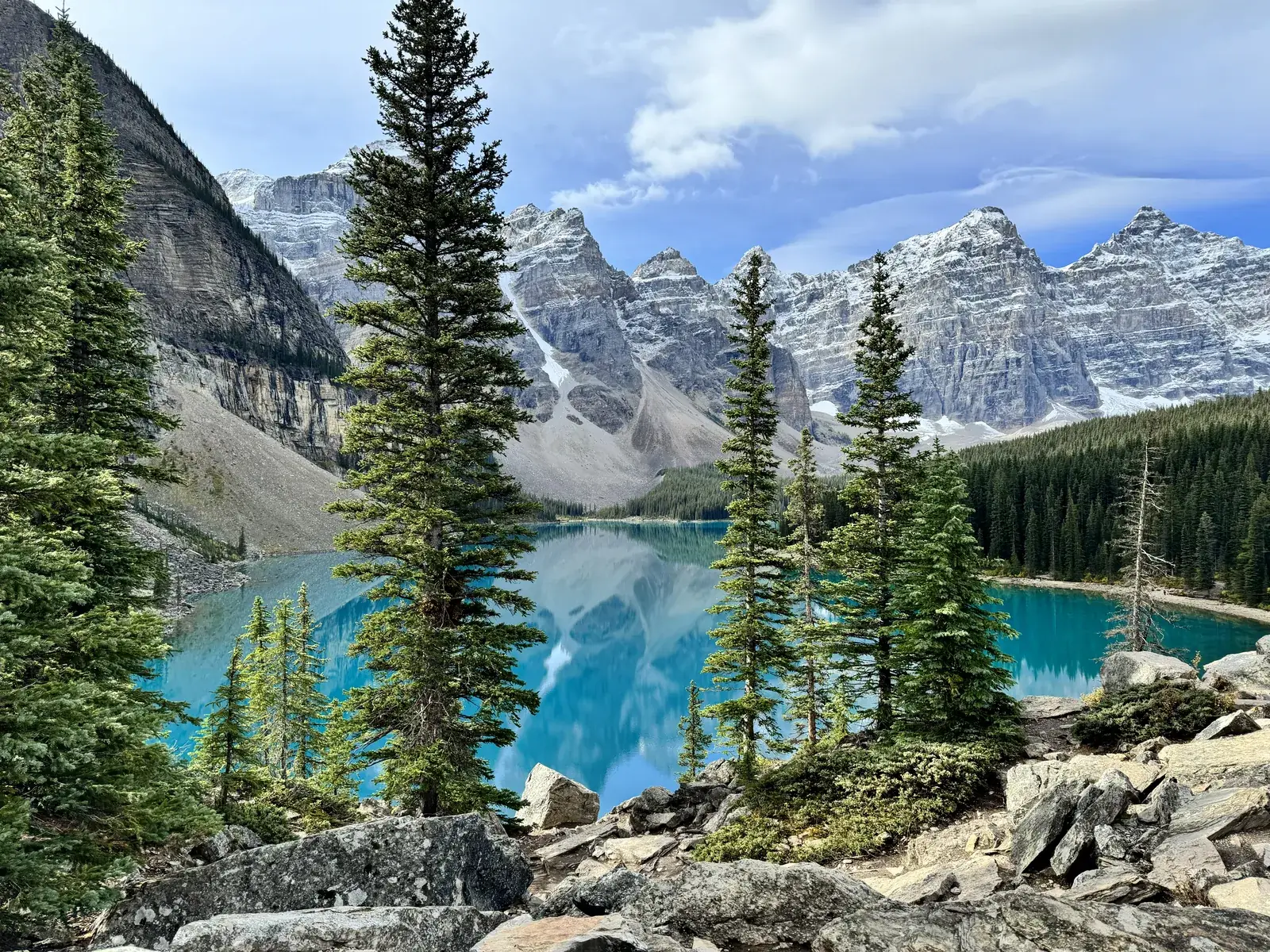
Moraine Lake is closed to private vehicles. Has been since 2023, year round, with no exceptions beyond accessibility permits. That does not mean you cannot get there. It means there are two realistic ways in, and the one you pick says a lot about how your week goes.
The Parks Canada shuttle is the cheap way, under thirteen dollars for an adult in 2026 plus a small booking fee, running June to mid October. It needs a reservation, and Parks Canada releases those in two waves, forty percent when booking opens in the spring and the remaining sixty percent at eight in the morning two days before you travel. The 2027 dates are not out yet. In 2026 booking opened on April 15, so if the shuttle is your plan, set a reminder for April and book the morning it opens.
The other way is a guided excursion, where getting there is part of the tour and the booking is somebody else’s problem. It costs more than the shuttle and it is what I book for most of my clients, because I would rather not ask you to set an alarm for a release window while you are on vacation. You can also walk in or bike in if that is your idea of a morning.
In winter the road is track-set for skiing and the lake itself is closed for avalanche risk.
Lake Louise you can drive to, in theory. In practice the lot is small enough that most people who try are turned away, and parking runs to about forty dollars a day. The Roam bus from Banff is the sensible answer instead, though note the lakeshore service is seasonal while the route to the village runs year round.
If you only have time for one, get yourself to Moraine and see Lake Louise on the way past. Moraine is the one people picture.
The Banff Gondola takes you to about 7,500 feet with a boardwalk along the ridge at the top, and it is fully accessible, which not much up there is. It is included in several of the longer packages, so check before you buy a ticket.
Johnston Canyon is catwalks bolted to the wall of a gorge. The Lower Falls are an easy hour and a half round trip. Go before eight in the morning or after seven in the evening or you will be walking in a line.
The Icefields Parkway, if you can fit it
The road from Lake Louise to Jasper runs about 144 miles and takes three to four hours if you do not stop, which nobody does. Give it a whole day. There is exactly one place to buy fuel along it and you should assume no phone signal for the duration.
The Columbia Icefield stop puts you on the Athabasca Glacier in a purpose-built vehicle and out on a glass-floored walkway over the valley, and takes about three hours all in. It sells out on peak dates.

Rocky Mountaineer’s Circle Journeys are the packages that include all of this and ride both train routes, out on one and back on the other. They run from about eleven nights up to fourteen depending on which one you take. That is the most complete version of this trip and what I recommend when someone has the time.
What it costs
Start with the whole trip, because that is what you are actually buying. A real week for two, with the train, the hotels, the touring and the meals, generally lands somewhere in five figures. Banff is the single biggest variable in that number, and its hotel rates have been at record highs.
The train by itself is the smaller piece. Rocky Mountaineer’s 2027 rates for the two-day First Passage to the West journey, which includes the one required hotel night in Kamloops and nothing else, run from 2,354 Canadian dollars per person in SilverLeaf in April up to 3,154 at the September peak. GoldLeaf runs 3,194 to 4,224 across the same months. Those are per person before taxes, and they already include your onboard gratuities and the station transfers at each end. Canadian dollars, so knock off roughly a quarter for the US figure at recent rates. Eastbound runs a little above westbound.
I do not like selling the train on its own. It is two days in the middle of a week you still have to build, and the people who book only the train are the ones who end up with a rushed Banff, the wrong number of nights and no Moraine Lake reservation.
Two things worth knowing about the pricing shape. September is the most expensive month, not July. The 2027 rate card shows it, and the reason is the light and the larches. And April is the value month, twenty to twenty-five percent below the September peak for the same mountains. October sounds like it should match April and does not. It lands under ten percent below peak.
Practical things that actually matter
Book six to twelve months out. GoldLeaf on a summer Friday and any room at the Chateau Lake Louise go first. I wrote separately about what sells out first.
Luggage is handled. Two checked bags, thirty kilos total and no single bag over twenty-three, moved for you from hotel to hotel. You carry a small day bag with medication, documents and a camera battery. That alone makes this an easy trip for people who are tired of wrangling suitcases.
Layers, seriously. Kamloops can be near a hundred degrees while the mountains are doing something else entirely the same afternoon.
Altitude is not your problem here. Lake Louise sits a bit over five thousand feet and the highest thing you will stand on is the gondola summit at around 7,500. This is Denver territory, not Cusco. Hydrate and stop worrying about it.
Wildlife rules are enforced. A hundred feet from deer, elk and sheep, about 330 feet from bears and wolves, and fines that run to five figures. Do not join a roadside animal jam.
You do not need a rental car. Banff is walkable, Moraine bans cars outright, Lake Louise parking is a lottery, and the Roam buses cover the rest. The only real case for a car is driving the Icefields Parkway yourself.
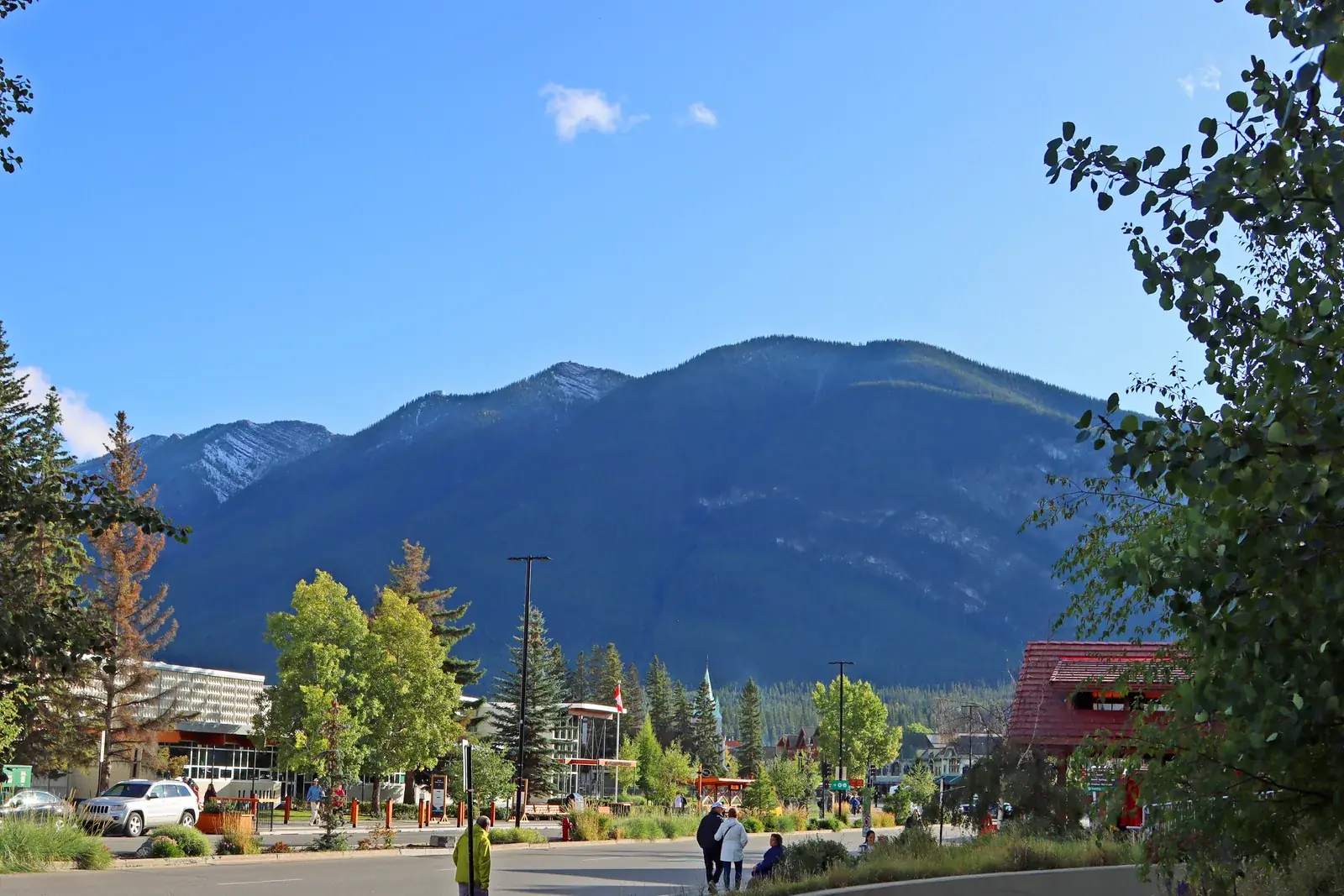
Getting home. Calgary is about eighty miles from Banff, an hour and a half, and there is a scheduled shuttle running eleven times a day. Most eight-day packages already include that leg and a Calgary night, which is precisely why they are eight days and not seven.
Canadian Rockies by train FAQ
How many days do I need? Eight is the comfortable number. Two travel days, two on the train, two or three in the mountains and a night in Calgary. Six can work. Four means you saw the train.
Which route should I take? First Passage to the West if you want Banff and Lake Louise and an easy flight home from Calgary. Journey Through the Clouds if Jasper and Mount Robson are what you came for.
Is GoldLeaf worth it over SilverLeaf? It depends on how much the bi-level dome and the downstairs dining room matter to you. I have ridden both and wrote up whether Rocky Mountaineer is worth it in detail.
Can I drive to Moraine Lake? No, private vehicles have been banned since 2023. You get there on the Parks Canada shuttle, on a guided excursion, or on foot or by bike. Whichever you choose, book it as early as you can.
When is the best time to go? Late spring and early autumn give you smaller crowds and better value. September is beautiful and, on the 2027 rate card, the most expensive month of the season. April and October are the quiet value months, with a shorter day and a chance of weather.
Do I need to be fit? No. This is a sitting-down trip with optional walking. The gondola boardwalk and the lakeshore paths are gentle, and the harder hikes are entirely optional.
Let’s shape your week
The train is the easy part to book. The value I add is the shape around it, which direction to ride, how many nights the mountains actually deserve, whether the Icefields Parkway day earns its place in your week, and getting the Moraine Lake piece booked before it goes. I will price the Canadian Rockies in full and hand you a bound itinerary with every confirmation in it. Reach out and let’s shape your week.